Why Health Records Need to Become Health Understanding

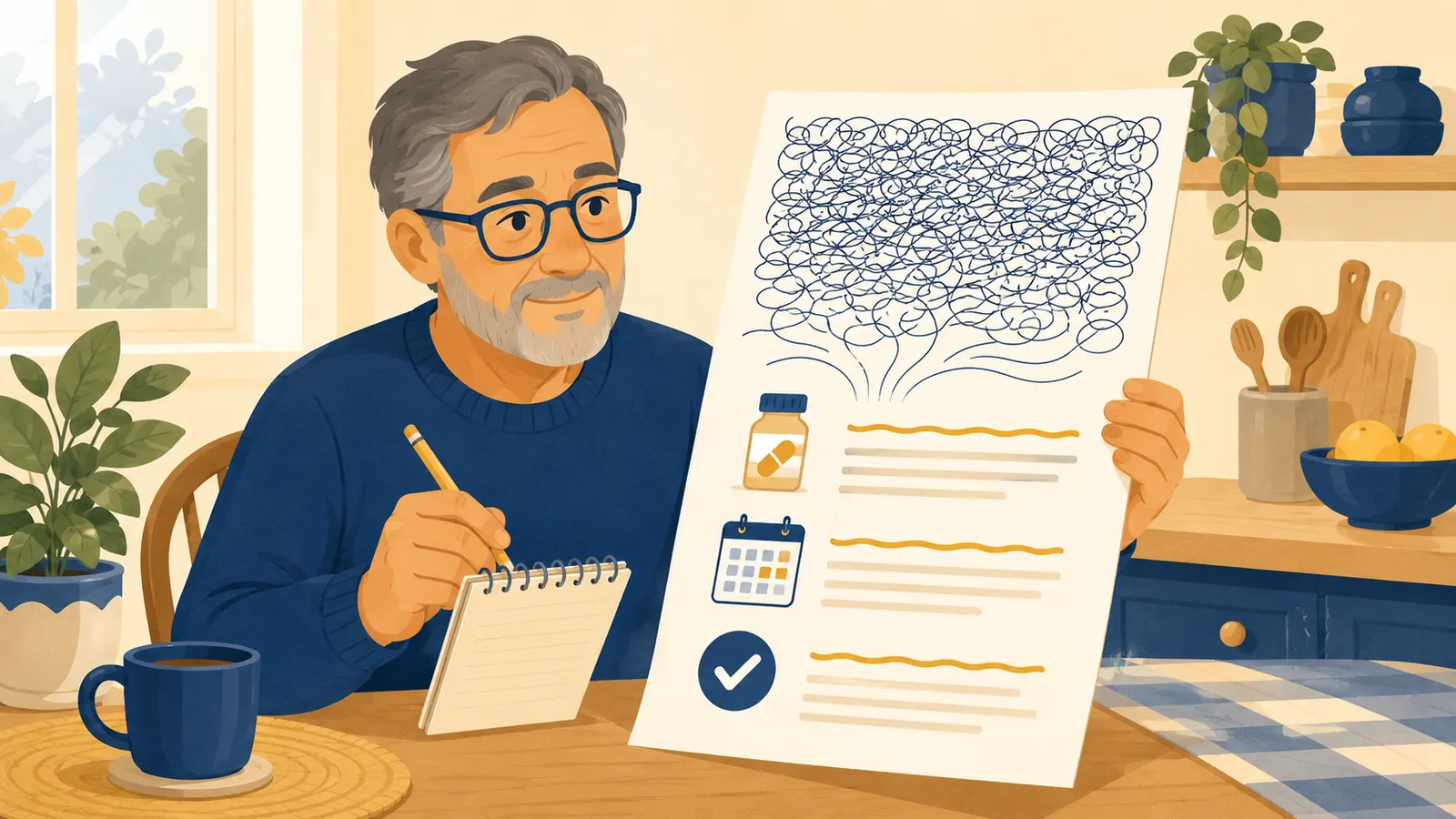
In short: Health care often hands people expert-level records and then expects them to turn those records into safe action on their own. In the largest national survey of its kind, only about 1 in 8 U.S. adults had the skills to do that with ease. That is a sign the information is too hard, not that people are failing. In other words, health care asks people to manage their own health, then hides the instructions. ChartQuest is designed to help turn health records into plain-language understanding, better questions for your care team, and manageable next steps.
The portal gave you the record. It did not always give you understanding, or a path forward.
You open your patient portal. A new lab result is there. So is a visit note, a changed medicine, and an after-visit summary. The information is technically available. It is also full of numbers, ranges, abbreviations, warnings, and medical terms.
So you are left with the hard part. What matters here? What should I ask? What do I do now? When should I call someone?
This moment is not rare. In the last major national assessment of adult health literacy, only 12 percent of U.S. adults had proficient health literacy. More than a third, about 77 million people, had basic or below basic skills, which means everyday tasks like following the directions on a prescription label can be a struggle. Later national studies have found little change. This is not a niche edge case. It is the normal design problem of modern health care.
Health literacy is more than reading
It is easy to hear "health literacy" and think it only means reading. It means much more than that. It includes listening, asking questions, using numbers, comparing choices, weighing risk, finding your way through a complex system, and turning information into action.
In real life, that looks like knowing what a lab result might mean, understanding when and how to take a medicine, knowing which checkups are due, figuring out what to ask after a diagnosis, and knowing when a symptom is urgent.
Here is the part that often gets missed. Even people who read very well can struggle when they are sick, scared, rushed, or facing a new diagnosis. Health literacy is situational. On a hard day, almost anyone can need help. And, often, we are alone when we need the most help.
The old framing blamed the patient. The better framing fixes the system.
For a long time, health literacy was treated as a patient problem. If someone was confused, the thinking went, they needed to try harder or learn more.
That framing has shifted, and for good reason. In 2020, the federal Healthy People 2030 initiative adopted two definitions of health literacy. Personal health literacy is a person's ability to find, understand, and use health information. Organizational health literacy is how well organizations make that information easy to find, understand, and use.
That second definition is the important one. It says a large share of the responsibility for being clear belongs to the system, not only to the patient. The problem is not that people do not care. The problem is that health care often gives people expert-level information and then expects them to turn it into safe action alone.
The cycle of crisis care
A well-known Health Affairs article by Howard Koh and colleagues described what happens when clarity is missing. They called it the cycle of crisis care, and they contrasted it with what health-literate care looks like instead.
The crisis loop is familiar. A person gets sick and seeks help. They meet confusing forms and rushed conversations. The diagnosis and the plan come wrapped in jargon. They go home with complicated instructions. No one checks that they understood. No one follows up. A medicine gets taken the wrong way, an appointment gets missed, or a warning sign goes unnoticed. The condition gets worse. And the person ends up back in urgent or emergency care.
To be clear: limited health literacy does not cause every emergency visit. But it can add avoidable confusion, delay, and poor follow-through to an already hard situation, and those add up.
What health-literate care looks like
Health-literate care uses simple language and clear forms. It offers help when people need it. It uses visuals and plain terms. It invites questions. It confirms understanding instead of assuming it. It plans treatment together. It follows up. And it gives people tools to act between visits.
This is not "dumbing down." It is safety design. A clear medicine instruction is not less serious than a complicated one. It is just more likely to be followed correctly.
Where ChartQuest fits
ChartQuest starts from a simple belief. Patients should not have to decode their health records alone.
ChartQuest is designed to be a health-understanding and action layer that sits with the patient. It is built to bring health information together, translate medical terms into plain language, and show what may matter and why. It helps people prepare better questions for their care team. It turns next steps into manageable quests across things like medicines, checkups, appointments, labs, and follow-up.
ChartQuest does not replace your doctor, nurse, or care team. It does not diagnose you and it does not tell you what treatment to choose. It helps you understand, helps you organize, and helps you prepare for the conversations where medical decisions actually get made. On privacy, ChartQuest is designed so identifying details are removed before information is sent to AI services, and only the minimum necessary context is shared.
Why the game layer matters
The game-style design is not there to make health less serious. It is there to give shape to work people already have to do.
Health already has goals, obstacles, routines, progress, setbacks, and support. ChartQuest uses quests and companions to make that work easier to see and easier to keep doing. Quests break big tasks into smaller steps. Companions like the Archivist, the Navigator, the Guardian, and the Signal Keeper can explain the same information in different ways, depending on what a person needs in the moment. Progress markers reinforce follow-through, and friendly visuals can lower the fear that a wall of medical text can create. Through all of it, the person stays in control. We walk through the research behind this design in its own article.
The principle: universal precautions
The strongest idea behind ChartQuest comes from the Health Literate Care Model, proposed by Koh, Brach, and colleagues. It calls for a universal precautions approach: assume that any person may be at risk of not understanding health information, then confirm and support understanding rather than guessing who needs help.
ChartQuest treats that as a design rule. Plain language comes first, with medical detail available on demand. Definitions appear in context. Numbers get support, so ranges, trends, and medicine instructions are easier to read. Examples and visuals are used often. "What to ask your care team" is built in. And personal and game features can be turned off, because control belongs to the user.
The reason this applies to everyone is simple. A person with an advanced degree, a caregiver who has managed illness for years, and someone facing a first diagnosis can all hit the same wall on a stressful day. Designing for that reality is not lowering the bar. It is meeting people where they are, when they need help the most.
The next step in digital health
For years, the goal in digital health was access. Give people their records. That was the right fight, and it largely succeeded. Most patients can now reach their information.
Access is not the finish line. The next step is helping people use those records to understand their story, ask better questions, and take the next safe step. That is the gap ChartQuest is built to close.
ChartQuest is built to help turn health records into health understanding, and health understanding into action. Start your journey with ChartQuest.
This article is for education. It is not medical advice. ChartQuest helps you understand and prepare. Your care team is still the source for medical decisions. If you think you may have a medical emergency, call 911 or your local emergency number right away.
Sources
- America's Health Literacy: Why We Need Accessible Health Information (HHS issue brief, based on the 2003 National Assessment of Adult Literacy), for the health literacy statistics.
- Health Literacy in Healthy People 2030, for the personal and organizational health literacy definitions.
- New Federal Policy Initiatives To Boost Health Literacy Can Help The Nation Move Beyond The Cycle Of Costly 'Crisis Care' (Koh et al., Health Affairs, 2012), for the cycle of crisis care and the health-literate care contrast.
- A Proposed 'Health Literate Care Model' (Koh, Brach, Harris, Parchman, Health Affairs, 2013), for the universal precautions principle.
- AHRQ Health Literacy Universal Precautions Toolkit, for practical health-literate design methods.
About the author: Dr. Darris Mishler holds a Doctor of Healthcare Administration and has more than 15 years of experience in healthcare information technology and health data. He has served as Board Chair of Oregon's statewide health information exchange and as president of the Oregon Health Information Management Association. He founded Human Viable Labs and created ChartQuest to help people understand their health records.